
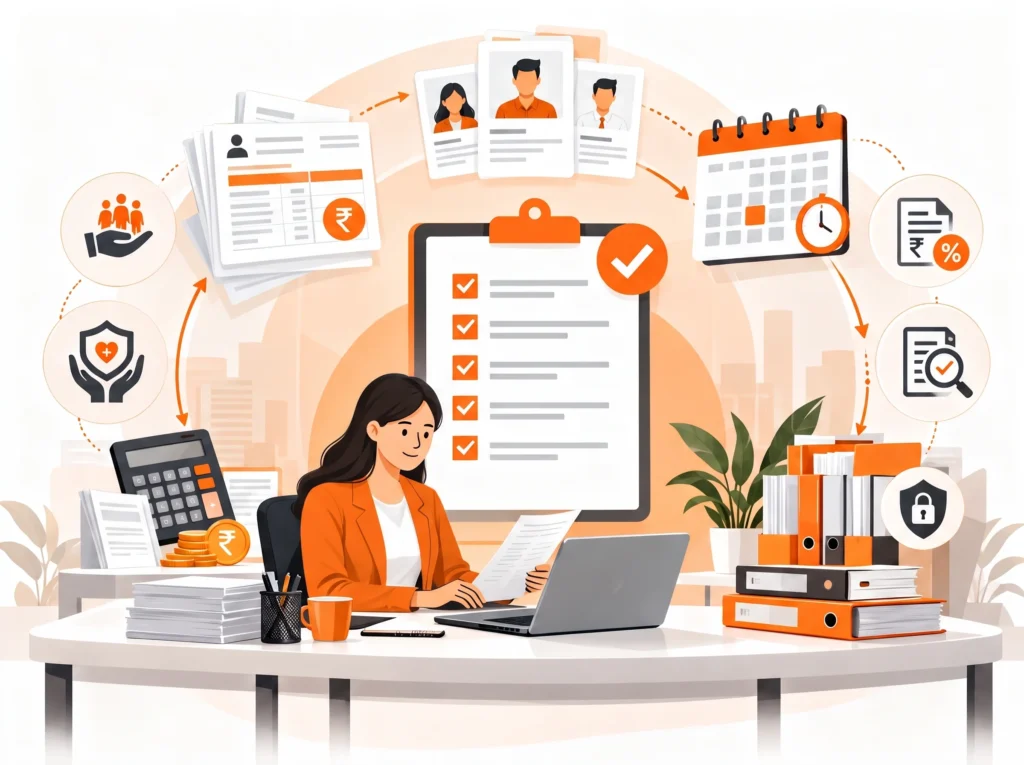
Payroll compliance means managing employee salaries, deductions, statutory contributions, taxes, records, and required filings according to applicable Indian laws. For small and growing businesses, a regular payroll compliance checklist helps reduce errors, avoid missed deadlines, and maintain accurate employee records. Businesses can also use a payroll compliance practitioner or professional payroll management services to simplify these responsibilities.
Key Takeaways
- Payroll compliance covers salary, deductions, taxes, statutory contributions, and records.
- PF, ESI, TDS, Professional Tax, and labor welfare fund may apply depending on the business.
- Payroll requirements can differ based on employee count, location, salary, and establishment type.
- Payroll should be reviewed every salary cycle.
- Accurate employee and attendance records are essential.
- Growing businesses can consider payroll outsourcing services to reduce administrative work.
- Professional payroll support can help identify and manage compliance requirements.
What Is Payroll Compliance?
Payroll compliance is the process of ensuring that employee payroll is calculated, processed, documented, and reported according to applicable laws and regulations.
It includes more than paying employees their monthly salary. Businesses may also need to calculate statutory deductions, deposit contributions and taxes, maintain employee records, issue salary documents, and complete applicable returns or filings.
The exact requirements depend on factors such as the type of business, employee strength, salary structure, state, and applicable legislation.
Payroll Compliance Checklist for Small Businesses
A simple checklist can help businesses avoid common payroll mistakes.
1. Maintain Complete Employee Records
Accurate employee information is the foundation of payroll compliance.
Maintain relevant details such as:
- Employee name and contact information
- Date of joining
- Designation and department
- Salary and compensation structure
- PAN details
- Bank account information
- PF and ESI information, where applicable
- Attendance and leave records
- Tax declarations and supporting documents
Update these records whenever an employee joins, leaves, receives a salary revision, or changes relevant personal or employment information.
2. Check Provident Fund Compliance
Businesses covered by applicable EPF requirements need to calculate and deposit PF contributions correctly.
The payroll team should regularly check:
- Employee and employer contributions
- Applicable wage components
- UAN details
- Employee eligibility
- Monthly contribution records
- Applicable payments and filings
PF requirements should be reviewed according to the current rules applicable to the establishment and employee.
3. Check ESI Requirements
The Employees’ State Insurance scheme applies to eligible employees and establishments meeting the relevant conditions.
Businesses should verify:
- Employee eligibility
- ESI contribution calculations
- Employee insurance details
- Contribution payments
- Required records and filings
Keeping employee information updated helps reduce errors in ESI-related payroll processing.
4. Manage Salary TDS Correctly
Salary TDS is an important part of payroll compliance for employers where tax deduction is applicable.
Businesses should:
- Calculate salary-related TDS
- Consider applicable employee declarations
- Deduct the appropriate amount
- Deposit TDS within the applicable deadline
- File required TDS returns
- Provide Form 16 where applicable
Tax provisions can change between financial years, so businesses should follow the rules applicable to the relevant period.
5. Review Professional Tax
Professional Tax is a state-level requirement and does not apply in exactly the same way across India.
Where applicable, businesses should check:
- Registration requirements
- Applicable employee deductions
- Contribution rates
- Payment deadlines
- Return requirements
Businesses operating in multiple states should review the requirements separately for each applicable location.
6. Check the Labour Welfare Fund
The Labour Welfare Fund may apply depending on the state and applicable legislation.
If applicable, businesses should track:
- Employee contributions
- Employer contributions
- Contribution rates
- Payment schedules
- Required records and returns
What Should Be Checked Before Processing Payroll?
Before every payroll cycle, businesses should verify the following:
Employee data: New joiners, resignations, promotions, salary changes, and bank details.
Attendance: Working days, leave, holidays, overtime, and other applicable attendance information.
Salary: Basic salary, allowances, incentives, bonuses, reimbursements, and deductions.
Statutory components: Applicable PF, ESI, Professional Tax, TDS, and other deductions.
Final review: Compare payroll calculations with previous records and investigate unusual changes before processing salaries.
This simple review can catch many payroll errors before salaries are paid.
What Records Should Businesses Maintain?
Good record management is an important part of payroll compliance.
Depending on applicable requirements, businesses may need to maintain records related to:
- Employee details
- Salary and wage payments
- Attendance
- Leave
- Overtime
- Deductions
- Statutory contributions
- Tax deductions
- Payroll registers
- Salary slips
- Statutory filings and payment records
Payroll records should be stored securely because they contain confidential employee information.
Why Is Payroll Compliance Important for Growing Businesses?
As a business grows, payroll becomes more complicated. More employees can mean more salary structures, deductions, statutory requirements, locations, and employee records.
A structured payroll compliance process can help businesses:
- Reduce calculation errors
- Avoid missed compliance deadlines
- Maintain organized records
- Improve employee confidence
- Reduce administrative workload
- Respond more efficiently to audits or inspections
- Create a consistent payroll process
Even a small payroll error can become significant when it affects many employees or is repeated over several months.
What Are Payroll Management Services?
Payroll management services help businesses handle routine payroll activities through a structured process.
Depending on the provider, services may include:
- Salary calculation
- Payroll processing
- Statutory deduction calculations
- Payroll reports
- Salary slips
- Employee data management
- Payroll reconciliation
- Compliance support
For growing businesses, professional payroll management services can reduce the amount of time HR and finance teams spend on repetitive payroll tasks.
When Should You Consider Payroll Outsourcing Services?
Payroll outsourcing services can be considered when:
- Your employee count is increasing
- Payroll takes significant internal time
- Your business operates across different locations
- Payroll calculations are becoming complicated
- You frequently find payroll errors
- Your HR team is small
- You need structured payroll support
Outsourcing payroll does not automatically transfer the legal responsibilities of the employer. Businesses should clearly understand the responsibilities handled by the service provider and those retained internally.
What Does a Payroll Compliance Practitioner Do?
A payroll compliance practitioner helps businesses review and manage applicable payroll requirements.
Their work may include reviewing payroll calculations, statutory deductions, employee records, compliance processes, and applicable filing requirements.
Professional support can be particularly useful when a business is expanding, hiring rapidly, or managing payroll across multiple locations.
How Validate Payroll LLP Can Help
Payroll compliance becomes increasingly important as a business grows. A clear checklist, accurate records, timely payments, and regular reviews can help create a more reliable payroll process. With professional support from Validate Payroll LLP, businesses can build a structured approach to payroll management while focusing more time on growth and day-to-day operations.
Final Thought
RPO and traditional recruitment agencies both help businesses hire employees, but their involvement can be different.
A recruitment agency in Vadodara may primarily focus on sourcing and recommending candidates for particular vacancies.
An RPO provider can take responsibility for a wider part of the recruitment process and work closely with the company’s internal HR team.
Frequently Asked Questions About Payroll Compliance
What is payroll compliance in India?
Payroll compliance is the process of ensuring that employee salaries, deductions, statutory contributions, taxes, records, and applicable filings are handled according to the relevant Indian laws and requirements.
What are the main payroll compliances in India?
Common payroll requirements may include PF, ESI, salary TDS, Professional Tax, labor welfare fund, wage records, salary records, and other requirements depending on the business, employees, and location.
Is payroll compliance mandatory for small businesses?
Applicable requirements depend on factors such as the business type, employee strength, salary levels, location, and relevant legislation. Small businesses should identify which requirements apply to their establishment and employees.
How can a payroll compliance practitioner help?
A payroll compliance practitioner can help review payroll calculations, statutory deductions, employee records, applicable compliance requirements, and payroll processes.
What are payroll management services?
Payroll management services are professional services that help businesses manage activities such as salary processing, payroll calculations, employee records, reports, and applicable statutory processes.
Are payroll outsourcing services suitable for growing businesses?
Yes. Payroll outsourcing services can be useful for growing businesses that want to reduce administrative work, improve payroll processes, and receive professional support with routine payroll activities and applicable compliance requirements.
How often should payroll compliance be checked?
Payroll should be reviewed during every payroll cycle. Businesses should also conduct periodic compliance reviews, particularly after changes in employees, salary structures, business locations, or applicable regulations.