
bvinfotech.007@gmail.com

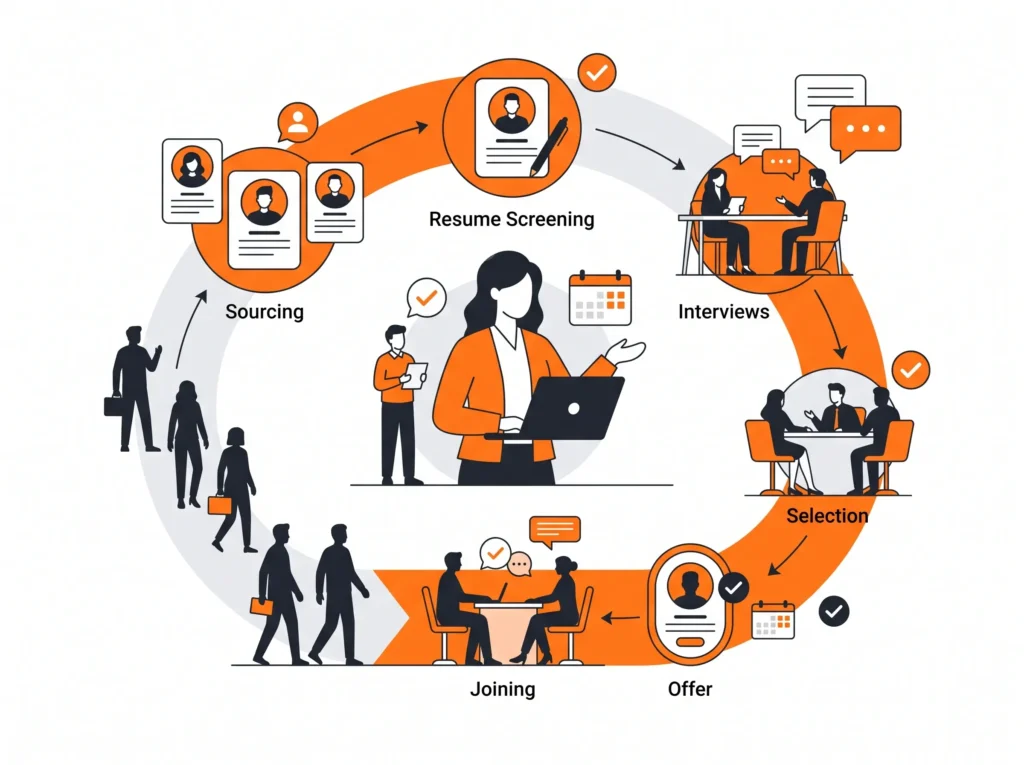
Recruitment Process Outsourcing (RPO) for sourcing, screening, interviews and candidate hiring

What Is RPO? How It Works and Benefits for Vadodara Businesses

Recruitment Process Outsourcing (RPO) is a hiring solution in which a business outsources part or all of its recruitment process to an external recruitment provider. An RPO provider can manage candidate sourcing, resume screening, shortlisting, interview coordination, candidate communication, and joining support. RPO helps businesses reduce HR workload, improve hiring efficiency, access recruitment expertise, and scale recruitment when hiring needs increase. Hiring the right employees is important for every growing business. However, recruitment can become time-consuming when a company has multiple vacancies, needs specialised talent, or has to hire a large workforce quickly. This is where Recruitment Process Outsourcing can make a difference. For businesses looking for professional hiring support, working with a recruitment consultancy in Vadodara can provide access to recruitment expertise while reducing the workload on internal HR teams. What Is Recruitment Process Outsourcing? Recruitment Process Outsourcing, commonly called RPO, is a recruitment model where an external service provider manages some or all of a company’s hiring activities. Instead of handling every recruitment task internally, a business can outsource selected activities to an RPO provider. Depending on the agreement, an RPO provider may manage: Understanding job requirements Creating job descriptions Candidate sourcing Resume screening Candidate shortlisting Interview scheduling Candidate communication Recruitment reporting Offer coordination Joining follow-ups The level of support can be customised according to the company’s hiring requirements. How Does RPO Work? RPO works through a structured recruitment process designed around the employer’s hiring needs. 1. Understanding the Hiring Requirements The RPO team first understands the company’s open positions, required qualifications, experience, skills, salary range, job responsibilities, and expected joining date. This creates a clear candidate profile for each vacancy. 2. Creating a Recruitment Strategy Once the requirements are clear, recruiters decide how to reach suitable candidates. Depending on the position, sourcing can include job portals, professional networks, candidate databases, referrals, recruitment campaigns, and direct candidate outreach. 3. Finding Suitable Candidates Recruiters actively search for candidates who match the required profile. For specialised positions, recruiters may use multiple sourcing methods to reach candidates who may not be actively applying for jobs. 4. Screening and Shortlisting Applications are reviewed against the company’s requirements. Recruiters may assess: Education Work experience Technical skills Industry knowledge Communication skills Relevant job experience Other role-specific requirements Suitable candidates are then shortlisted for the next stage. 5. Interview Coordination The recruitment team coordinates interviews between shortlisted candidates and the company’s hiring managers. This may include scheduling interviews, communicating interview details, collecting feedback, and updating candidates about the recruitment process. 6. Offer and Joining Support After a candidate is selected, the RPO team can assist with offer communication, documentation, joining coordination, and follow-ups. This helps reduce communication gaps between selection and joining. What Are the Benefits of RPO for Businesses? The major RPO benefits for businesses include faster hiring, reduced HR workload, better candidate sourcing, recruitment expertise, scalable hiring, and improved candidate experience. Faster Recruitment A dedicated recruitment team can continuously focus on sourcing and screening candidates. This can help businesses reduce the time required to fill vacancies, especially when employees are needed quickly for expansion or operational requirements. Reduced HR Workload Recruitment involves several repetitive tasks, including searching for candidates, reviewing resumes, scheduling interviews, and following up with applicants. Outsourcing these activities allows internal HR teams to focus on employee engagement, training, performance management, and other important responsibilities. Access to Recruitment Expertise Professional recruitment providers understand candidate sourcing, screening, hiring trends, and recruitment challenges. Businesses can use this expertise without having to build a large internal recruitment team. Better Candidate Screening Getting a large number of resumes does not guarantee finding the right employee. An RPO team can use defined screening criteria to identify candidates who are more closely aligned with the job requirements. This allows hiring managers to focus their time on more relevant candidates. Scalable Hiring Support Hiring requirements can change quickly. A company may need only a few employees during normal operations but require a much larger workforce during expansion, new projects, seasonal demand, or business growth. RPO allows recruitment capacity to increase when hiring requirements increase. Improved Candidate Experience Candidates value clear and timely communication. A dedicated recruitment team can keep applicants informed about interviews, selection stages, documentation, and joining requirements. This creates a more organised and professional hiring experience. RPO vs Recruitment Agency: What Is the Difference? RPO and traditional recruitment agencies both help businesses hire employees, but their involvement can be different. A recruitment agency in Vadodara may primarily focus on sourcing and recommending candidates for particular vacancies. An RPO provider can take responsibility for a wider part of the recruitment process and work closely with the company’s internal HR team. RPO Recruitment Agency Can manage part or all of recruitment Usually focuses on specific vacancies Works closely with internal HR Works as an external recruitment partner Suitable for ongoing hiring Often suitable for targeted hiring Can support high-volume recruitment Can support individual or multiple vacancies The process can be customised Usually focused on agreed positions Neither option is automatically better. The right choice depends on the company’s hiring volume, budget, workforce requirements, and internal HR capabilities. When Should a Business Consider RPO? A business should consider RPO when it: Has frequent hiring requirements Needs to recruit employees at scale Is expanding its operations Has a small internal HR team Struggles to find skilled candidates Needs to fill vacancies quickly Requires additional recruitment capacity Wants to improve its hiring process Is planning bulk recruitment Businesses can also outsource only specific recruitment activities instead of their entire hiring process. How Can RPO Help Businesses in Vadodara? Vadodara has businesses across manufacturing, engineering, pharmaceuticals, chemicals, IT, services, and other industries. These sectors can have different workforce requirements and recruitment challenges. For example, a manufacturing company may need skilled technical workers, while a service business may require sales, administrative, or customer-support employees. An RPO model can provide flexible recruitment support based on these different requirements. For companies searching for placement consultants in Baroda, an RPO approach can be particularly useful

What Is RPO? How It Works and Benefits for Vadodara Businesses Read More »

Industrial Housekeeping vs Office Cleaning services shown in factory and office environments

What Is Industrial Housekeeping and Why It Differs from Regular Office Cleaning?

Industrial housekeeping focuses on cleaning, safety, waste management, and workplace organisation in factories, warehouses, plants, and workshops. It differs from office cleaning because industrial workplaces often deal with dust, oil, grease, machinery, production waste, and larger areas. Keeping a workplace clean is important for hygiene, safety, employee comfort, and productivity. However, industrial housekeeping requires different cleaning methods and safety practices than regular office cleaning. Industrial housekeeping includes cleaning production areas, floors, machinery surroundings, storage spaces, employee facilities, and waste zones while maintaining appropriate workplace safety standards. Regular office cleaning mainly focuses on keeping offices clean, hygienic, and professional. For businesses looking for housekeeping services in Vadodara or cleaning services in Vadodara, understanding this difference can help them choose the right service for their workplace. What Is Industrial Housekeeping? Industrial housekeeping is a structured approach to maintaining cleanliness and order in industrial environments. Unlike a typical office, an industrial workplace can have production equipment, raw materials, heavy machinery, dust, grease, oil, packaging materials, and different types of waste. These conditions require a more organized and specialized housekeeping approach. Industrial housekeeping may include: Cleaning factory floors and production areas Removing dust, dirt, oil, and grease Cleaning around machinery and equipment Maintaining warehouses and storage areas Cleaning worker rest areas and washrooms Managing routine workplace waste Cleaning entrances, pathways, and common areas Maintaining general workplace hygiene Supporting safe and organized work areas The exact housekeeping requirements depend on the type of industry, size of the facility, production process, and workplace conditions. What Is Regular Office Cleaning? Regular office cleaning is designed for offices, commercial buildings, administrative workplaces, and similar environments. The main objective is to keep the workplace clean, comfortable, hygienic, and presentable for employees, customers, and visitors. A typical office cleaning service may include: Dusting desks and furniture Vacuuming carpets Sweeping and mopping floors Cleaning windows and glass Cleaning washrooms Emptying waste bins Sanitizing frequently touched surfaces Cleaning meeting rooms Maintaining reception and common areas Office cleaning is generally simpler because these workplaces usually do not have the same level of industrial dust, grease, machinery, or production waste found in factories. How Is Industrial Housekeeping Different from Office Cleaning? The biggest difference is the type of workplace, cleaning requirements, safety considerations, and equipment involved. Factor Industrial Housekeeping Office Cleaning Workplace Factories, plants, warehouses, workshops Offices and commercial spaces Main cleaning needs Dust, grease, oil, production waste Dust, dirt, food, and general waste Equipment May require industrial cleaning equipment Usually standard cleaning equipment Safety Requires greater attention to workplace hazards Generally lower cleaning-related risk Area Often large production and storage spaces Offices, cabins, meeting rooms Cleaning frequency Often linked to production activity Usually based on a fixed schedule Main goal Clean, organized, and safer industrial workplace Clean, hygienic, and professional office This is why a housekeeping team experienced in office cleaning may not automatically be suitable for a large factory or manufacturing facility. What Does Industrial Housekeeping Include? Industrial housekeeping can cover several areas of a facility. 1. Production Area Cleaning Production floors can collect dust, dirt, packaging materials, and other workplace waste. Regular cleaning helps keep these areas organized and easier to work in. 2. Machinery Surroundings Housekeeping teams may clean accessible areas around machinery and equipment according to the facility’s safety procedures. Cleaning should never interfere with operating machinery or expose workers to unnecessary risks. 3. Warehouse Cleaning Warehouses need regular sweeping, floor cleaning, waste removal, and general housekeeping to maintain organized storage and clear pathways. 4. Washroom and Common Area Maintenance Employee washrooms, rest areas, cafeterias, entrances, and other shared spaces also require regular cleaning and hygiene maintenance. 5. Waste Management Industrial workplaces can generate significant amounts of packaging, production, and general waste. Proper segregation and disposal procedures should follow the facility’s requirements and applicable rules. Why Is Industrial Housekeeping Important? Good industrial housekeeping can provide several practical benefits. Better Workplace Safety Clean and organized pathways can help reduce avoidable housekeeping-related hazards such as clutter and slippery surfaces. Improved Productivity Employees can work more efficiently when their work areas, pathways, and surroundings are properly maintained. Better Hygiene Regular cleaning of floors, washrooms, common areas, and frequently used spaces supports a healthier workplace environment. Improved Workplace Appearance A clean factory or warehouse creates a more organized impression for employees, customers, suppliers, and visitors. Better Organization Proper housekeeping can help keep work areas, storage spaces, and common facilities organized and easier to maintain. How Often Should an Industrial Facility Be Cleaned? There is no single cleaning schedule that works for every industrial facility. Cleaning frequency depends on the industry, production activity, facility size, amount of dust or waste, and specific workplace requirements. For example, a high-production facility may require housekeeping several times during a shift, while another facility may need daily cleaning combined with weekly or periodic deep cleaning. A practical housekeeping plan should identify: Areas requiring frequent cleaning Daily housekeeping tasks Weekly cleaning activities Periodic deep-cleaning requirements Waste collection schedules Staff responsibilities Safety procedures Can an Office Cleaning Service Clean a Factory? It depends on the service provider and the requirements of the factory. Standard office cleaning may not be sufficient for an industrial facility. Factories can require specialized cleaning equipment, trained housekeeping staff, larger teams, different cleaning procedures, and greater attention to workplace safety. Before hiring a provider, businesses should confirm whether the team has experience working in industrial environments. What Should Businesses Check Before Hiring Housekeeping Services in Vadodara? Businesses should select housekeeping providers based on their actual workplace requirements rather than choosing a service only because it is inexpensive. Before hiring a provider, check: Experience with industrial or commercial workplaces Number of housekeeping workers available Staff training and supervision Cleaning equipment and methods Safety procedures Waste-handling practices Cleaning frequency Backup or replacement manpower Quality monitoring Ability to customize the service For industrial businesses, it is also useful to define responsibilities, working hours, cleaning areas, reporting procedures, and safety expectations before the service begins. Why Choose the Right Cleaning Services in Vadodara? Vadodara has a strong mix of

What Is Industrial Housekeeping and Why It Differs from Regular Office Cleaning? Read More »

Labour Contractors providing skilled workforce and industrial staffing solutions

How Labour Contractors Work: The Complete Guide for Factory Owners in Vadodara

A labour contractor connects factories with workers and helps manage workforce requirements. Before hiring one, factory owners should check their experience, compliance, worker quality, pricing, documentation, and replacement policy. Running a factory requires more than machines, raw materials, and production planning. Having the right number of workers at the right time is equally important. However, recruiting, managing, paying, and maintaining compliance for a large workforce can be challenging. This is where a contractor for labour can help. Labour contractors connect businesses with workers and support day-to-day workforce management, allowing factory owners to focus more on production and operations. For factories in Gujarat, especially industrial areas around Vadodara, choosing the right labour contractor can make workforce management more organised and efficient. What Is a Labour Contractor? A labour contractor is a service provider that helps businesses arrange workers for specific jobs, projects, or ongoing operations. Depending on the agreement, a labour contractor may help with: Finding and supplying suitable workers Maintaining worker records Managing attendance Coordinating workforce deployment Supporting wage and payroll processes Handling required documentation Assisting with statutory compliance Managing replacements when workers leave or are unavailable The exact responsibilities depend on the contract between the factory and the contractor. How Does a Labour Contractor Work? The process is generally straightforward. 1. The Factory Shares Its Workforce Requirement The factory first tells the contractor how many workers it needs and what type of work they will perform. For example, a factory may require: Machine operators Helpers Packers Loaders and unloaders Production workers Maintenance support Skilled or semi-skilled workers The contractor then understands the required skills, working hours, workforce size, and expected duration. 2. The Contractor Sources Workers The contractor searches for workers who match the factory’s requirements. A good factory labour contractor should focus on providing workers who are suitable for the required job instead of simply supplying a large number of people. Depending on the role, worker screening may include checking experience, skills, documentation, and other requirements specified by the employer. 3. Workers Are Deployed at the Factory Once suitable workers are identified, they are deployed according to the agreed schedule. The factory generally provides instructions related to the actual work, workplace safety, production requirements, and operational procedures. The contractor coordinates workforce-related matters according to the agreement. 4. Attendance and Workforce Records Are Managed Accurate attendance records are important because they can affect wages, overtime, leave, and payroll calculations. A professional labour contractor should maintain proper records and ensure that workforce information is updated regularly. Digital attendance systems can also make this process easier and reduce manual errors. 5. Wage and Payroll Processes Are Coordinated Depending on the arrangement, the contractor may manage wage calculations and payroll-related administration for contract workers. This can reduce the administrative workload for factory management. However, factory owners should clearly understand who is responsible for each payroll and compliance activity before signing an agreement. 6. Compliance Is Monitored Labour supply is not simply about providing workers. It also involves following applicable employment, wage, safety, social-security, and contract-labour requirements. Responsibilities can vary depending on the nature of the establishment, workforce, and contractual arrangement. Therefore, factories should work with contractors who understand applicable labour requirements and maintain proper documentation. Why Do Factories Use Labour Contractors? There are several reasons why businesses choose contract workforce solutions. Faster Workforce Availability Factories may need additional workers when production increases or when there is a sudden shortage of staff. A contractor can help businesses access workers without starting the entire recruitment process from scratch. Reduced Administrative Work Managing a large workforce involves attendance, documentation, payroll coordination, and other administrative activities. Outsourcing some of these responsibilities can save management time. Flexible Workforce Planning Production requirements can change from month to month. Labour contractors can help businesses manage workforce requirements according to operational needs and agreed contractual terms. Access to Different Types of Workers An experienced labour supplier in Vadodara may have access to workers with different levels of skills and experience, making it easier for factories to fill workforce requirements. What Should Factory Owners Check Before Hiring a Labour Contractor? Choosing a contractor only because they offer workers at a low cost can create problems later. Before selecting a labour contractor in Vadodara, factory owners should check: 1. Experience Look for a contractor who understands industrial workforce requirements and has experience working with businesses similar to yours. 2. Documentation Make sure the contractor maintains proper worker records and required documentation. 3. Compliance Practices Ask how the contractor handles applicable wages, social security, labour, and other statutory requirements. 4. Workforce Quality Check whether the contractor can consistently provide workers with the skills required for your operations. 5. Attendance and Payroll System Ask whether attendance and wage records are maintained manually or digitally. Clear and accurate records can prevent disputes. 6. Replacement Support Workers may leave, take extended leave, or become unavailable. Ask whether the contractor can provide replacements when required. 7. Clear Contract Terms The agreement should clearly explain responsibilities, service charges, payment terms, worker deployment, compliance responsibilities, and other important conditions. How Much Does a Labour Contractor Charge? There is no single fixed price for labour contracting services. The cost can depend on: Number of workers Type of work Skill level Working hours Overtime requirements Duration of the contract Payroll and administrative services Compliance-related responsibilities Location and operational requirements Factory owners should compare quotations based on the complete service and compliance structure, rather than choosing the lowest price alone. Labour Contractor vs Direct Hiring: Which Is Better? Both models can work depending on the factory’s requirements. Direct hiring may provide greater control over recruitment and workforce management but can increase administrative responsibilities. Contract labour can provide greater flexibility and reduce some workforce-management workload, particularly when businesses have changing labour requirements. The right choice depends on factors such as workforce size, production needs, business structure, and compliance responsibilities. Common Mistakes Factory Owners Should Avoid When hiring a contractor for labour, avoid these common mistakes: Choosing a contractor only because of a

How Labour Contractors Work: The Complete Guide for Factory Owners in Vadodara Read More »

Manpower Supplier connecting businesses with qualified workers and workforce solutions

What Should Businesses Check Before Hiring a Manpower Supplier?

Before hiring a manpower supplier, businesses should check their experience, legal compliance, worker quality, pricing, documentation, replacement policy, and reputation. Hiring the right employees is important, but managing recruitment, payroll, attendance, and documentation can take considerable time. A reliable manpower supplier can make workforce management easier by providing suitable workers based on business requirements. However, choosing the wrong agency can lead to compliance issues, poor-quality workers, high turnover, and extra costs. So, businesses should carefully evaluate a supplier’s experience, recruitment process, compliance, pricing, worker quality, documentation, and replacement policy before signing an agreement. Let’s look at these factors in detail. 1. Check the Supplier’s Experience Experience is one of the first things businesses should consider. An experienced manpower supply agency is more likely to understand different workforce requirements, industry expectations, recruitment challenges, and employee management processes. Ask the supplier: How long have they been providing manpower services? Which industries do they serve? What types of workers can they provide? Do they handle skilled, semi-skilled, or unskilled manpower? Can they manage large workforce requirements? A supplier with relevant industry experience may be better prepared to handle your specific requirements. 2. Verify Legal and Labour Compliance Compliance should never be overlooked when hiring manpower. A manpower supplier should follow applicable labour laws and statutory requirements. Depending on the nature of the workforce and the arrangement, this may include requirements related to wages, employee records, Social Security, and other statutory obligations. Before hiring, businesses should clearly understand: Who is responsible for employee documentation? Who handles statutory compliance? How are wages processed? How are attendance and leave records maintained? What compliance documents will be provided? Working with a supplier that takes compliance seriously can help businesses reduce avoidable legal and administrative risks. 3. Understand the Recruitment Process Do not choose an agency simply because it promises to provide workers quickly. Ask how the supplier actually recruits and screens candidates. A reliable manpower supply agency in Vadodara should have a structured process for identifying suitable candidates according to the client’s job requirements. The process may include: Requirement analysis → Candidate sourcing → Screening → Interviews → Document verification → Selection → Deployment Businesses should also check whether workers are evaluated based on skills, experience, qualifications, and job suitability. 4. Check Worker Quality Getting workers quickly is useful, but getting the right workers is more important. Before signing a contract, explain your workforce requirements clearly. Mention the required skills, experience, working hours, job responsibilities, and expected performance. Ask the supplier how they ensure that candidates match these requirements. For example, a manufacturing business may need workers who understand specific production processes, while an office may need administrative or support staff. The supplier should have the ability to match workers with the actual job. 5. Ask About Documentation and Verification Employee documentation is another important area to check. Businesses should understand what verification is conducted before workers are deployed. Depending on the job and applicable requirements, this can include verification of: Identity Address Educational qualifications Previous work experience Relevant skills Other required documents Proper documentation can make workforce administration easier and help businesses maintain organized employee records. 6. Compare Pricing Carefully Cost is important, but the cheapest supplier is not always the best choice. When comparing manpower suppliers, businesses should understand exactly what is included in the quoted price. Ask about: Worker wages Service or management fees Statutory costs Recruitment charges Replacement charges Overtime-related costs Other applicable expenses Request a clear cost structure before agreeing. This helps prevent unexpected charges later. 7. Understand the Replacement Policy Employee turnover can happen in any business. A worker may leave, become unavailable, or fail to meet performance expectations. Therefore, businesses should ask what happens when a deployed worker needs to be replaced. A good supplier should have a clearly defined replacement process. Ask: How quickly can you provide a replacement if a worker leaves or is unsuitable? Having this information in writing can help businesses avoid operational disruptions. 8. Check Communication and Support Good communication is essential when managing outsourced manpower. The supplier should have a dedicated contact person or team that businesses can reach when they have questions or workforce issues. Check how the supplier handles: Worker absenteeism Attendance issues Performance concerns Replacement requests Payroll-related queries Workforce expansion Emergency manpower requirements Fast and clear communication can make the entire process easier. 9. Look at Reputation and Client Feedback Before selecting a manpower supplier in Vadodara, research the company’s reputation. Look for genuine client reviews, testimonials, industry experience, and information about existing clients. You can also ask the supplier for references from businesses they have worked with. Instead of focusing only on positive claims, try to understand whether the supplier is known for: Reliable worker deployment Timely service Transparent billing Good communication Compliance support Consistent workforce quality 10. Read the Agreement Carefully Never sign a manpower service agreement without understanding its terms. The agreement should clearly explain responsibilities for both parties. Pay attention to: Scope of services Payment terms Workforce requirements Working conditions Compliance responsibilities Replacement terms Notice periods Termination conditions Confidentiality requirements Dispute resolution If something is unclear, ask the supplier to explain it before signing. Why Choosing the Right Manpower Supply Agency Matters The right manpower supplier can do more than simply provide workers. It can become a valuable workforce management partner. A reliable supplier can help businesses: Save recruitment time Reduce administrative workload Access suitable workers Manage changing workforce requirements Improve recruitment efficiency Maintain better documentation Support workforce continuity For growing businesses, this can make workforce management more organized and efficient. Validate Payroll LLP can help businesses understand their manpower and payroll-related requirements and choose workforce solutions that fit their operational needs. Quick Checklist Before Hiring a Manpower Supplier Before making your final decision, ask these questions:  ✔ Does the supplier have relevant experience? ✔ Are legal and statutory responsibilities clearly defined? ✔ How are workers recruited and screened? ✔ Are candidate documents properly verified? ✔ Can the supplier provide workers with the required skills? ✔

What Should Businesses Check Before Hiring a Manpower Supplier? Read More »

Payroll Management and payroll outsourcing processes for employee salary administration

Payroll Management vs Payroll Outsourcing: What Is the Difference?

Payroll management means handling employee salary processing, deductions, records, and compliance within the business, usually through an internal HR or finance team. Payroll outsourcing means assigning these responsibilities to an external payroll service provider. Both approaches can work, but the right choice depends on your business size, payroll complexity, internal expertise, cost, and compliance requirements. For growing businesses, understanding this difference can help reduce payroll errors, save administrative time, and create a more efficient payroll process. What Is Payroll Management? Payroll Management is the complete process of calculating and processing employee salaries while maintaining accurate payroll records and meeting applicable statutory requirements. When payroll is managed internally, the company’s HR, finance, or payroll team usually handles the process from start to finish. Payroll management may include: Collecting attendance and leave information Calculating employee salaries Managing bonuses, incentives, and overtime Calculating applicable deductions Processing salary payments Maintaining payroll records Preparing payroll reports Supporting statutory payroll compliance Answering employee payroll queries For a small company with a straightforward payroll structure, managing these activities internally can be practical. However, payroll becomes more demanding as the workforce grows or salary structures become more complex. What Are Payroll Management Services? Payroll management services are professional services that help businesses handle payroll-related activities accurately and efficiently. A business does not necessarily have to outsource every HR function. It can use payroll management services for specific activities such as salary calculations, payroll processing, reporting, documentation, and compliance support. This can be useful for companies that want professional payroll assistance without creating a large internal payroll department. The exact services offered can vary depending on the provider and the business’s requirements. What Is Payroll Outsourcing? Payroll outsourcing services involve hiring an external payroll provider to manage some or all payroll responsibilities on behalf of a business. Instead of an internal team spending significant time processing payroll every month, the external provider manages the agreed activities according to the company’s requirements. Depending on the arrangement, payroll outsourcing may cover: Employee payroll processing Salary calculations Payroll reports Statutory deductions Payroll documentation Compliance support Payroll data management Payslip generation Payroll-related employee support In simple terms, payroll management is the function, while payroll outsourcing is one way of getting that function managed by an external specialist. Payroll Management vs Payroll Outsourcing: What Is the Difference? The main difference is who is responsible for managing the payroll process. With internal payroll management, your own HR or finance team manages payroll. With payroll outsourcing, an external service provider handles the responsibilities assigned to them. Factor Payroll Management Payroll Outsourcing Payroll handled by Internal team External provider Internal workload Higher Lower Control Direct internal control Managed through agreed processes Expertise Depends on employees Access to payroll specialists Compliance support Internal responsibility External support may be available Scalability May require additional resources Easier to scale with the provider Technology Business manages its system The provider may provide technology Cost Staff, software, and operational costs Outsourcing/service fees Neither option is automatically better. The best choice depends on what your organization needs. When Is Internal Payroll Management a Good Choice? Managing payroll internally can be suitable for businesses that have a small workforce, simple salary structures, and an experienced HR or finance team. It may be a good option when: Payroll calculations are relatively simple Your team understands payroll requirements You already have suitable payroll software Your company wants direct control Payroll does not take excessive staff time You have processes for reviewing payroll accuracy However, internal management requires ongoing attention. Payroll regulations, employee information, deductions, and reporting requirements must be handled correctly and on time. When Should a Business Consider Payroll Outsourcing? A business may consider payroll outsourcing services when payroll becomes difficult or time-consuming to manage internally. Outsourcing can be useful when: Your employee count is increasing Payroll takes too much time every month Your HR team has other important responsibilities Payroll errors are becoming a concern Your payroll structure is becoming more complicated You need additional compliance expertise You want to reduce repetitive administrative work For growing businesses, outsourcing can allow internal HR and finance teams to spend more time on recruitment, employee engagement, financial planning, and other important activities. How Does a Payroll Compliance Practitioner Help? A payroll compliance practitioner focuses on helping businesses maintain payroll processes that meet applicable legal and statutory requirements. Payroll compliance is important because incorrect deductions, records, calculations, or filings can create financial and administrative problems for a business. A payroll compliance practitioner may help with: Reviewing payroll processes Monitoring applicable regulatory changes Supporting statutory compliance Checking payroll documentation Identifying potential payroll errors Improving payroll procedures Supporting accurate payroll reporting Professional compliance support can be particularly valuable for businesses that do not have dedicated payroll specialists internally. Is Payroll Outsourcing Cost-Effective? Payroll outsourcing can be cost-effective when the time, resources, software, and expertise required to manage payroll internally become significant. However, cost should not be the only factor. Businesses should also consider: Payroll accuracy Compliance support Data security Service quality Scalability Internal staff workload Technology Provider experience A lower-cost solution is not necessarily better if it increases the risk of errors or creates additional work for your team. How Should You Choose Between Payroll Management and Outsourcing? Start by evaluating your current payroll process. Ask yourself: How many employees do we have?A larger workforce generally means more payroll data and administrative work. How complex is our payroll?Multiple salary structures, incentives, deductions, locations, or employment categories can increase complexity. Does our team have payroll expertise?If payroll knowledge is limited, professional support may reduce the risk of mistakes. How much time does payroll take?If employees spend several days every month on repetitive payroll tasks, outsourcing may improve efficiency. Do we have strong compliance processes?Businesses need a reliable method for monitoring and meeting applicable payroll requirements. Can our current system support future growth?A payroll process that works for a small company may become inefficient as the organization expands. Final Thoughts Choosing between Payroll Management and payroll outsourcing services depends on your

Payroll Management vs Payroll Outsourcing: What Is the Difference? Read More »

Office Cleaning Service maintaining a clean and organized workplace

What Is an Office Cleaning Service and Why Is It Important?

An office cleaning service is a professional cleaning solution that helps businesses maintain a clean, hygienic, and organized workplace. It includes daily cleaning, sanitation, waste management, dust removal, washroom maintenance, and complete workplace hygiene support. Professional cleaning services help companies create a healthier environment, improve employee productivity, and maintain a professional image. What Is an Office Cleaning Service? An office cleaning service is a specialized service provided by trained professionals to keep commercial workplaces clean and well-maintained. Unlike regular cleaning, professional office cleaning follows planned processes, uses proper equipment, and ensures every area of the workplace receives proper attention. Modern offices require more than basic dusting and sweeping. Employees spend several hours at their workplace, making cleanliness and hygiene essential for their comfort, health, and productivity. Professional office cleaning services usually include: Workstation and desk cleaning Floor cleaning and maintenance Washroom sanitization Pantry and cafeteria cleaning Garbage disposal Glass and window cleaning Dust and stain removal Deep cleaning services Companies can select cleaning schedules according to their needs, including daily, weekly, or monthly cleaning plans. Why Is an Office Cleaning Service Important for Businesses? A clean workplace creates a positive environment for employees, clients, and visitors. Poor office hygiene can lead to unhealthy surroundings, reduced productivity, and a negative business impression. Here are the major reasons why businesses invest in professional cleaning solutions. 1. Creates a Healthier Workplace Offices are shared spaces where dust, allergens, and germs can easily spread through desks, keyboards, door handles, and common areas. A professional office cleaning service helps reduce harmful bacteria and maintains proper hygiene standards by using effective cleaning methods and products. A cleaner workplace can help employees feel more comfortable and support better overall workplace wellness. 2. Improves Employee Productivity and Satisfaction Employees perform better when they work in a clean and organized environment. Untidy workspaces, dirty washrooms, and poor hygiene conditions can affect employee focus and motivation. Regular cleaning services help create a pleasant workplace where employees can concentrate better on their tasks. 3. Saves Time and Reduces Operational Stress Managing office cleaning internally requires additional resources, including hiring cleaning staff, purchasing supplies, and monitoring daily work. By choosing professional cleaning solutions, businesses can save time and focus on important activities while experts handle workplace maintenance. 4. Builds a Professional Business Image Your office environment represents your company’s professionalism. A clean and organized workplace creates a positive impression on customers, employees, and business partners. A reliable corporate cleaning service ensures that offices maintain professional cleanliness standards and provide a welcoming experience for everyone. 5. Provides Trained Cleaning Professionals Professional cleaning companies provide trained staff who understand proper cleaning procedures, safety practices, and hygiene requirements. This ensures better cleaning quality compared to untrained workers handling basic cleaning tasks. What Services Are Included in an Office Cleaning Service? A professional cleaning package may include multiple services depending on business requirements. Daily Office Cleaning Daily cleaning services help maintain regular workplace hygiene through: Sweeping and mopping floors Cleaning desks and workstations Emptying waste bins Sanitizing common areas Maintaining washroom cleanliness Deep Cleaning Services Deep cleaning focuses on areas that require detailed attention, such as: Carpets and furniture Windows and glass surfaces Office equipment Corners and hidden areas Housekeeping Services Professional housekeeping services provide complete workplace support, including cleaning, maintenance assistance, and daily facility management. Businesses searching for reliable housekeeping services in Vadodara can benefit from trained professionals who ensure consistent workplace cleanliness. How Does a Professional Office Cleaning Service Work? A professional cleaning process usually includes the following steps: 1. Workplace Assessment The cleaning provider first understands the office size, requirements, and cleaning frequency. 2. Customized Cleaning Plan A suitable cleaning schedule is prepared based on office operations and hygiene needs. 3. Professional Cleaning Execution Trained staff perform cleaning tasks using appropriate tools and techniques. 4. Quality Monitoring Regular checks help maintain service quality and ensure workplace standards are followed. What Are the Benefits of Hiring a Corporate Cleaning Service? A corporate cleaning service provides specialized cleaning support designed for offices, commercial buildings, and large workplaces. Key benefits include: Better workplace hygiene Reduced employee sick days Improved office appearance Professional cleaning standards Flexible service options Reduced management workload For growing businesses, outsourcing cleaning services is an efficient way to maintain a professional workplace without increasing internal responsibilities. Office Cleaning Service vs In-House Cleaning: Which Is Better? Professional Office Cleaning In-House Cleaning Trained cleaning experts Requires employee management Professional equipment Additional investment needed Flexible cleaning schedules Limited resources Consistent quality Quality may vary Professional cleaning services provide better convenience, efficiency, and reliability for most businesses. Why Choose Validate Payroll LLP for Office Cleaning Services? Validate Payroll LLP helps businesses manage their workplace support requirements with reliable manpower solutions and professional services. The company focuses on providing efficient cleaning and housekeeping support that helps organizations maintain better workplace standards. Benefits of choosing Validate Payroll LLP include: Trained and reliable workforce Customized service solutions Professional workplace support Quality-focused approach Efficient service management With the right cleaning partner, businesses can maintain a cleaner, healthier, and more productive workplace. Conclusion A professional office cleaning service is essential for businesses that want a healthier, cleaner, and more productive workplace. From daily cleaning to complete housekeeping support, professional services help maintain hygiene while allowing companies to focus on growth. With reliable workplace solutions from Validate Payroll LLP, businesses can create a safe and professional environment for employees and visitors. Investing in proper office cleanliness is not just a maintenance decision—it is an investment in workplace success. Frequently Asked Questions What does an office cleaning service include? An office cleaning service includes workplace cleaning tasks such as dusting, floor cleaning, washroom sanitation, waste management, pantry cleaning, and deep cleaning. Why is office cleaning important? Office cleaning is important because it improves workplace hygiene, supports employee health, increases productivity, and creates a professional business environment. How often should an office be cleaned? Most offices require daily cleaning, but the frequency depends on office size, employee numbers, and workplace requirements. What is the

What Is an Office Cleaning Service and Why Is It Important? Read More »

Manpower Consultancy providing candidate selection and workforce recruitment services

What Is Manpower Consultancy? A Complete Guide for Businesses in 2026

A manpower consultancy is a professional recruitment service that helps businesses find, evaluate, and hire suitable employees based on their workforce requirements. These agencies manage candidate sourcing, screening, interviews, and hiring support to help companies save time, reduce recruitment costs, and build a skilled workforce. What Does Manpower Consultancy Mean? A manpower consultancy is a company that connects employers with qualified candidates. It works as a recruitment partner by understanding a business’s staffing needs and providing suitable employees. Instead of managing the entire hiring process in-house, companies can work with a manpower consultancy to find skilled professionals more quickly. Manpower consultancy = Expert support for finding and hiring the right employees. Why Is Manpower Consultancy Important for Businesses in 2026? Businesses today face challenges like skill shortages, competitive hiring markets, and increasing employee expectations. Finding the right person for the right role has become more difficult. A professional manpower consultancy helps businesses by: Finding qualified candidates quickly Reducing hiring workload Improving employee quality Providing industry-specific talent Supporting temporary and permanent staffing needs In 2026, companies are focusing more on efficient workforce management, making manpower services an important business solution. How Does a Manpower Consultancy Work? A manpower consultancy follows a step-by-step recruitment process: 1. Understanding Company Requirements The consultancy first understands: Job role Required skills Experience level Number of employees needed Hiring timeline This helps them create the right recruitment strategy. 2. Candidate Search Consultants search for candidates through: Recruitment databases Professional networks Job portals Industry contacts 3. Candidate Screening Before recommending candidates, the consultancy checks: Qualification Experience Technical skills Communication ability Job suitability 4. Interview and Selection Support The consultancy helps businesses coordinate interviews and complete the hiring process smoothly. What Services Does a Manpower Consultancy Provide? A professional manpower consultancy offers complete workforce solutions to help businesses manage hiring, staffing, and employee-related operations. Labour Contract Services Provides a skilled workforce on a contractual basis while helping businesses manage labor requirements efficiently. Housekeeping Services Offers trained housekeeping staff to maintain cleanliness, hygiene, and workplace management. HR & Legal Compliance Services Helps businesses manage HR processes, employee records, labor laws, and compliance requirements. Payroll Management Services Handles salary processing, attendance management, payslips, and payroll-related activities accurately. Recruitment / RPO (Recruitment Process Outsourcing) Manages the recruitment process, including candidate sourcing, screening, interviews, and hiring support to help businesses find the right talent faster. What Are the Benefits of Hiring a Manpower Consultancy? Saves Hiring Time Recruitment can take weeks or months. A manpower consultancy already has candidate networks, making hiring faster. Reduces Recruitment Costs Companies can avoid spending heavily on job advertising, screening, and recruitment management. Provides Skilled Candidates Professional consultants understand industry requirements and help businesses find suitable talent. Improves Hiring Accuracy Proper screening reduces the chances of hiring unsuitable candidates. Helps Business Growth With the right workforce, companies can improve productivity and achieve business goals faster. Why Choose Manpower Consultancy in Vadodara? Vadodara is a growing industrial and business hub with companies across manufacturing, engineering, healthcare, IT, and service sectors. Businesses often require reliable employees to maintain productivity and operations. A trusted manpower consultancy in Vadodara helps organizations: Find local skilled candidates Reduce hiring challenges Fill vacancies faster Manage workforce requirements efficiently Similarly, a professional manpower supplier in Vadodara can provide trained employees for different industries and business requirements. How to Select the Right Manpower Consultancy? Before choosing a recruitment partner, businesses should consider: Industry Experience Choose a consultancy that understands your industry and hiring requirements. Recruitment Process A reliable consultancy should have proper screening and candidate evaluation methods. Candidate Quality Focus on companies that provide skilled and suitable employees, not just quick hiring. Client Support Good communication and ongoing support are important for successful workforce management. Why Choose Validate Payroll LLP for Manpower Consultancy Services? Validate Payroll LLP helps businesses simplify their workforce requirements with reliable recruitment and staffing solutions. The company focuses on understanding business needs, finding suitable candidates, and supporting organizations with efficient manpower solutions. Whether businesses require skilled professionals, staffing support, or workforce management assistance, Validate Payroll LLP provides solutions designed to improve hiring efficiency. Frequently Asked Questions What is the role of a manpower consultancy? A manpower consultancy helps businesses find, screen, and hire suitable employees according to their workforce requirements. How does manpower consultancy help companies? It helps companies save time, reduce hiring costs, access skilled candidates, and improve recruitment efficiency. Is manpower consultancy useful for small businesses? Yes. Small businesses can use manpower consultancy services to hire employees without maintaining a large recruitment team. What is the difference between manpower consultancy and a recruitment agency? Both help businesses hire employees, but manpower consultancies often provide broader workforce solutions, including staffing and employee management support How can I find the best manpower consultancy in Vadodara? Look for experience, industry knowledge, candidate quality, transparent processes, and positive client feedback.

What Is Manpower Consultancy? A Complete Guide for Businesses in 2026 Read More »